
ESG Insights

Thumbnail News
Scope 3 Reporting Requirements in Singapore
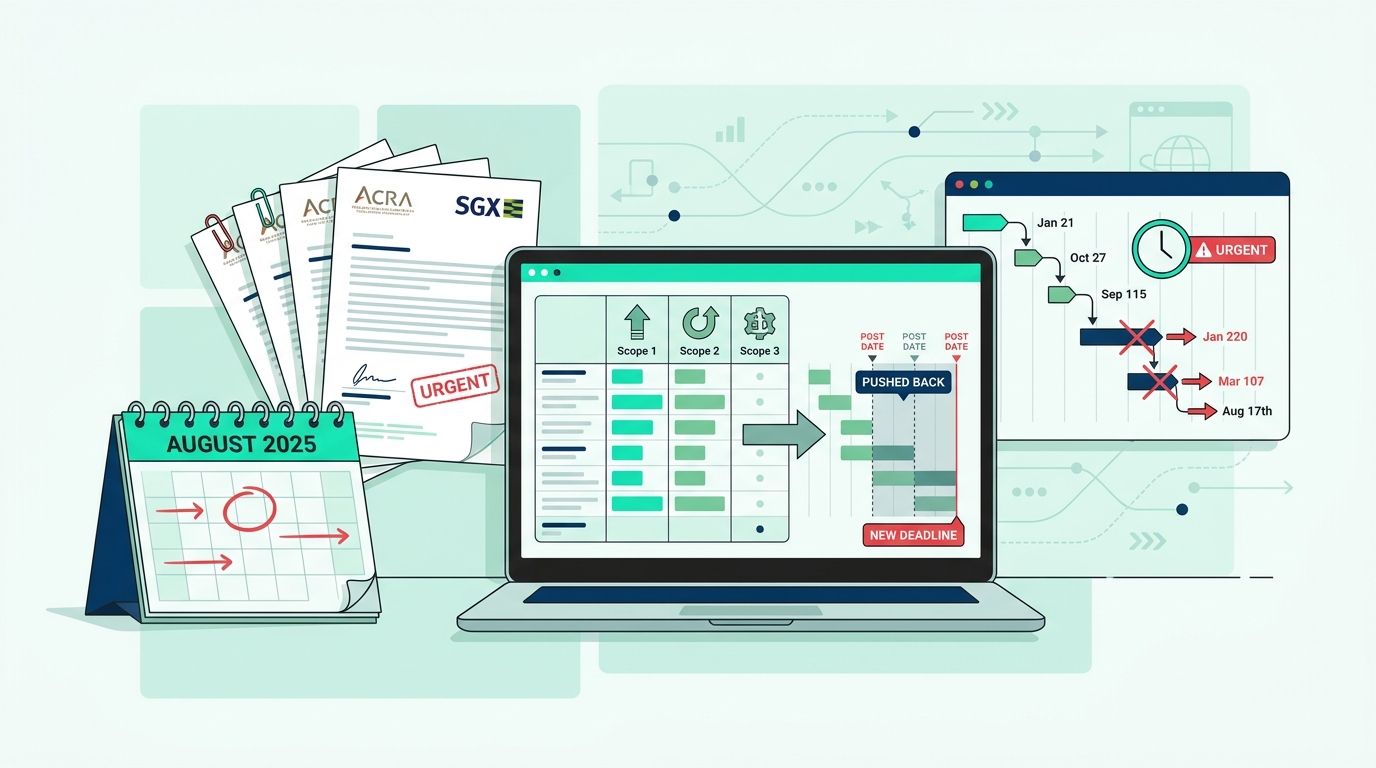
Most Singapore companies asking about Scope 3 want one thing first: does this apply to me, and by when. The answer changed in August 2025, when ACRA and SGX RegCo revised the climate reporting timetable and pushed several deadlines back.
Sep 10, 2026
Thumbnail News
How to Prioritise Suppliers for Scope 3 Data Collection
Prioritise suppliers by spend concentration, emissions contribution and data risk, not alphabetically or by contract renewal date. Start with the suppliers that represent the largest share of your Scope 3 footprint or procurement spend, then layer in factors such as sector
Sep 10, 2026
Thumbnail News
Spend-Based vs Supplier-Specific Scope 3 Data: What's the Difference?
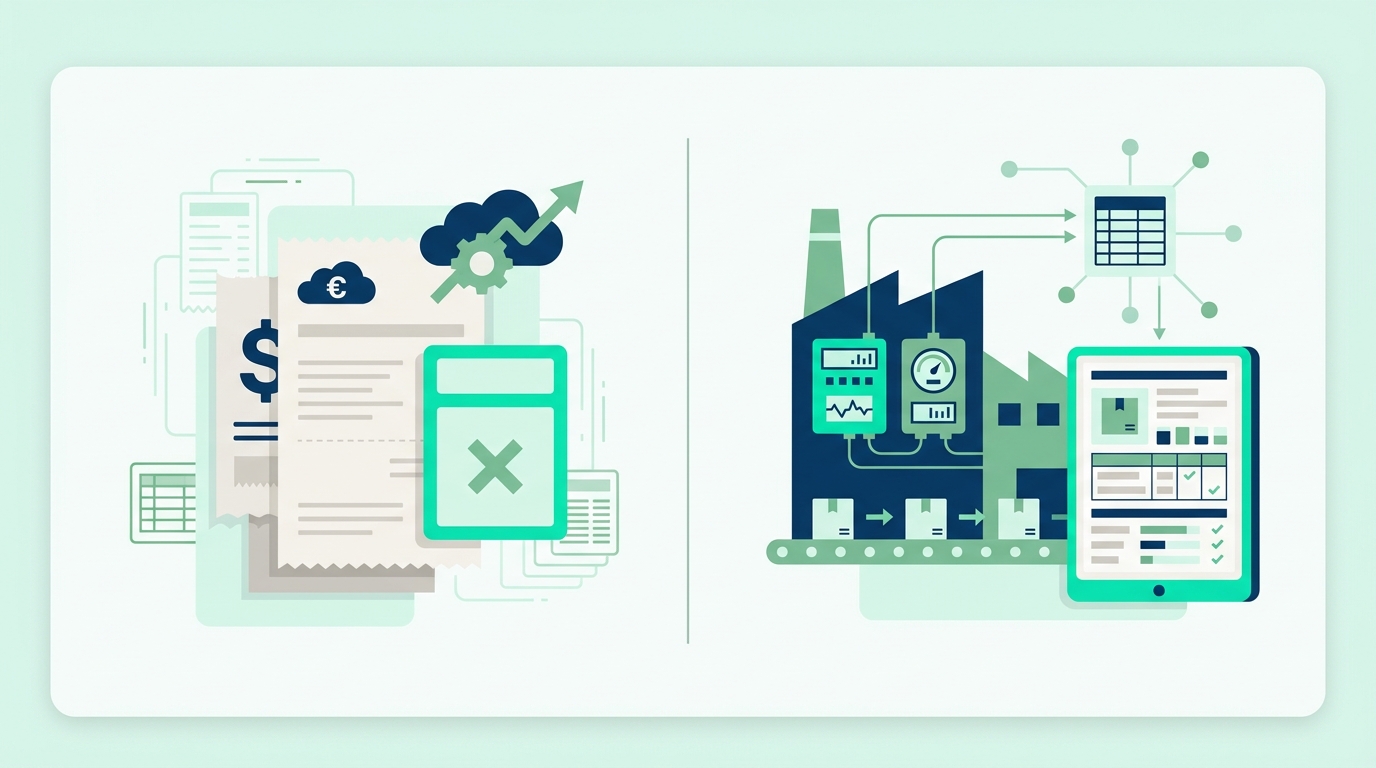
Spend-based data estimates supplier emissions by multiplying money spent on a purchase by an industry-average emission factor. Supplier-specific data uses primary, product-level activity data collected directly from the supplier.
Sep 9, 2026
Thumbnail News
How to Collect Scope 3 Data From Suppliers
Collecting Scope 3 data from suppliers means building a repeatable process to request, gather, validate and store emissions and activity data from vendors across your value chain, mapped to the GHG Protocol's 15 Scope 3 categories.
Sep 9, 2026
Thumbnail News
How to Calculate Scope 3 Emissions: Methods and Data Explained
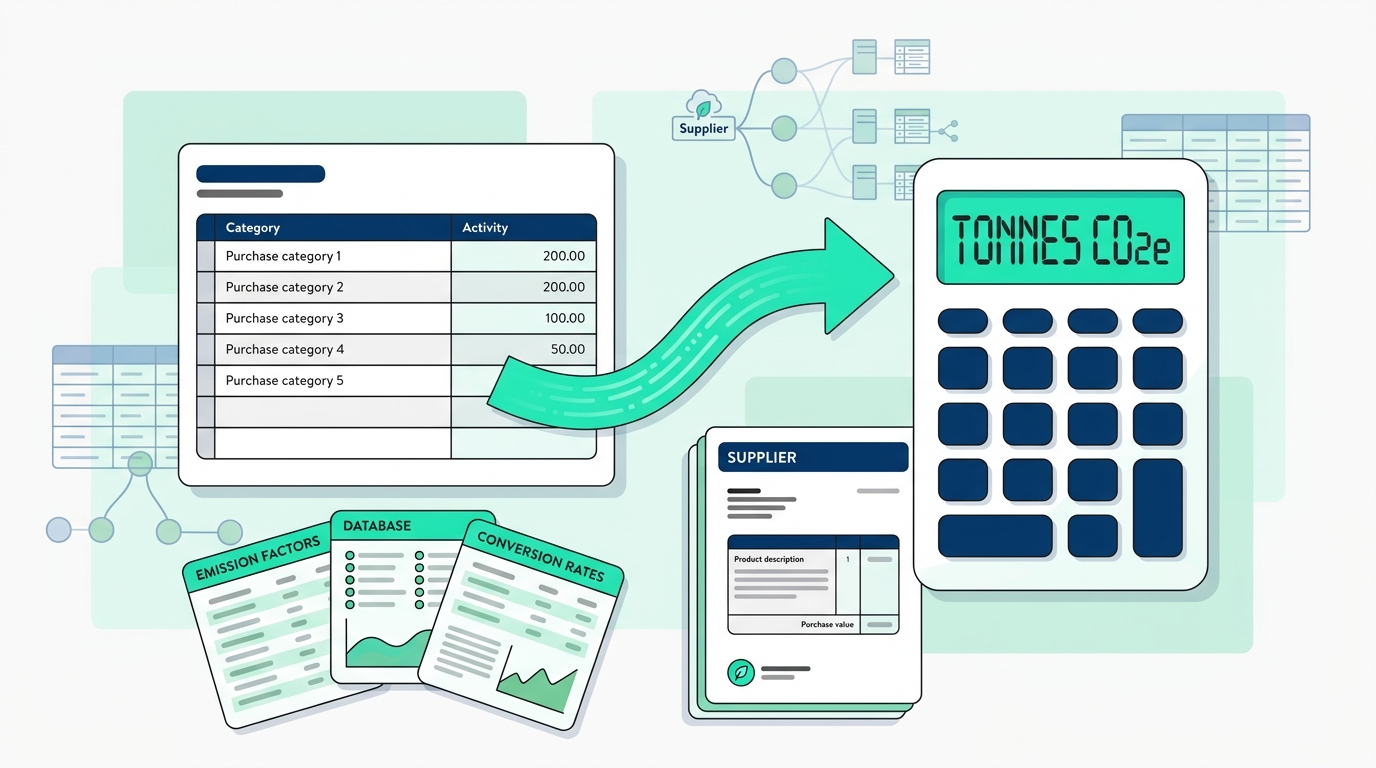
You have screened the 15 categories and you know which ones carry your footprint. The next question is mechanical: how do you turn what your business actually did into a number in tonnes?
Sep 9, 2026
Thumbnail News
What Are Scope 3 Emissions? A Practical Guide for Businesses
For many companies, Scope 3 is where emissions reporting gets complicated. The emissions sit across the value chain, and so does the data. A practical guide to what Scope 3 covers, why it becomes difficult, and where to start.
Sep 9, 2026
Thumbnail News
Scope 3 Reporting Requirements in Singapore
Most Singapore companies asking about Scope 3 want one thing first: does this apply to me, and by when. The answer changed in August 2025, when ACRA and SGX RegCo revised the climate reporting timetable and pushed several deadlines back.
September 10, 2026
Text Link
Thumbnail News
How to Prioritise Suppliers for Scope 3 Data Collection
Prioritise suppliers by spend concentration, emissions contribution and data risk, not alphabetically or by contract renewal date. Start with the suppliers that represent the largest share of your Scope 3 footprint or procurement spend, then layer in factors such as sector
September 10, 2026
Text Link
Thumbnail News
Spend-Based vs Supplier-Specific Scope 3 Data: What's the Difference?
Spend-based data estimates supplier emissions by multiplying money spent on a purchase by an industry-average emission factor. Supplier-specific data uses primary, product-level activity data collected directly from the supplier.
September 9, 2026
Text Link
Thumbnail News
How to Collect Scope 3 Data From Suppliers
Collecting Scope 3 data from suppliers means building a repeatable process to request, gather, validate and store emissions and activity data from vendors across your value chain, mapped to the GHG Protocol's 15 Scope 3 categories.
September 9, 2026
Text Link
Thumbnail News
How to Calculate Scope 3 Emissions: Methods and Data Explained
You have screened the 15 categories and you know which ones carry your footprint. The next question is mechanical: how do you turn what your business actually did into a number in tonnes?
September 9, 2026
Text Link
Thumbnail News
What Are Scope 3 Emissions? A Practical Guide for Businesses
For many companies, Scope 3 is where emissions reporting gets complicated. The emissions sit across the value chain, and so does the data. A practical guide to what Scope 3 covers, why it becomes difficult, and where to start.
September 9, 2026
Text Link